// working paper · 2026
No News Before the News
Information flow and price behaviour ahead of announcements
Abstract
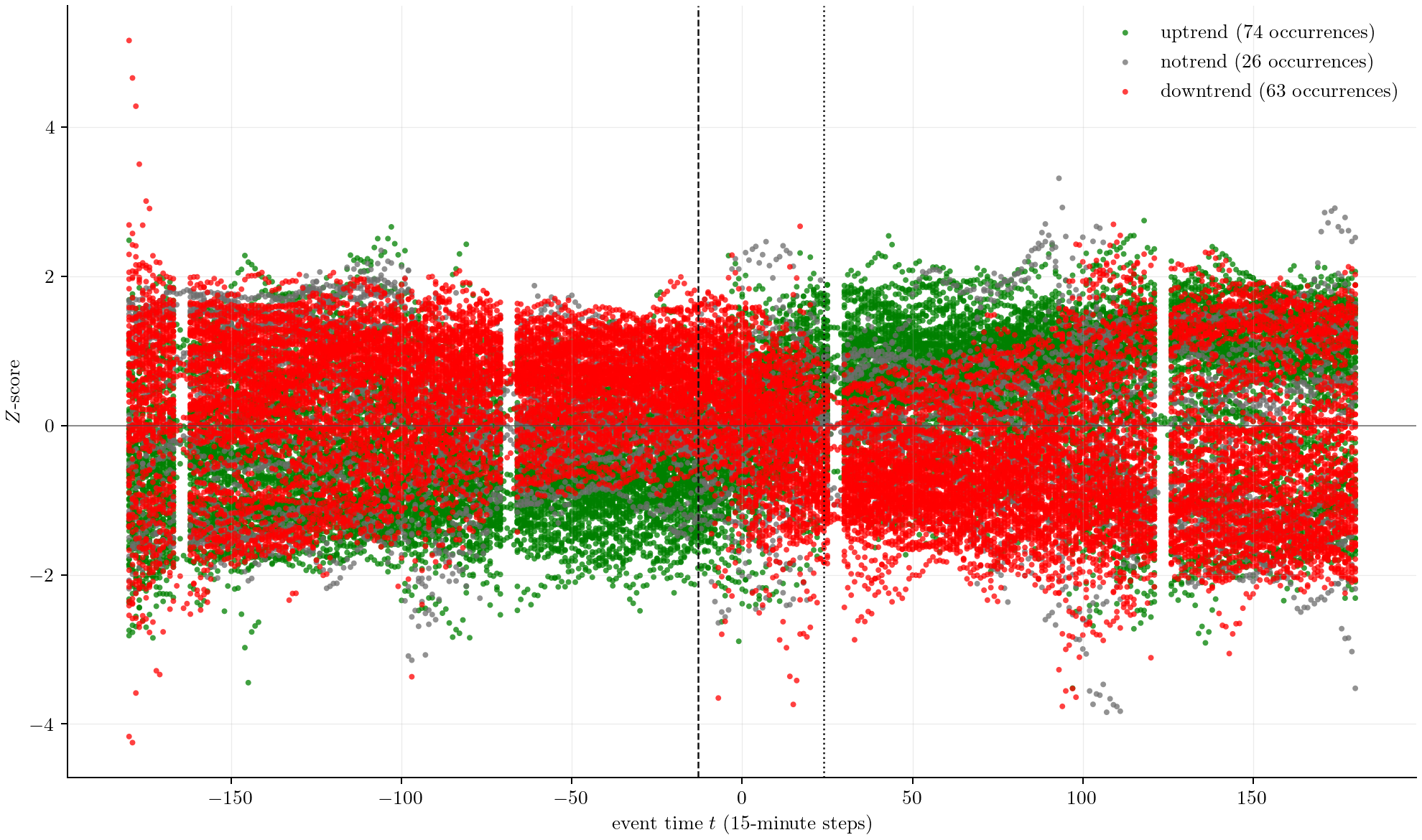
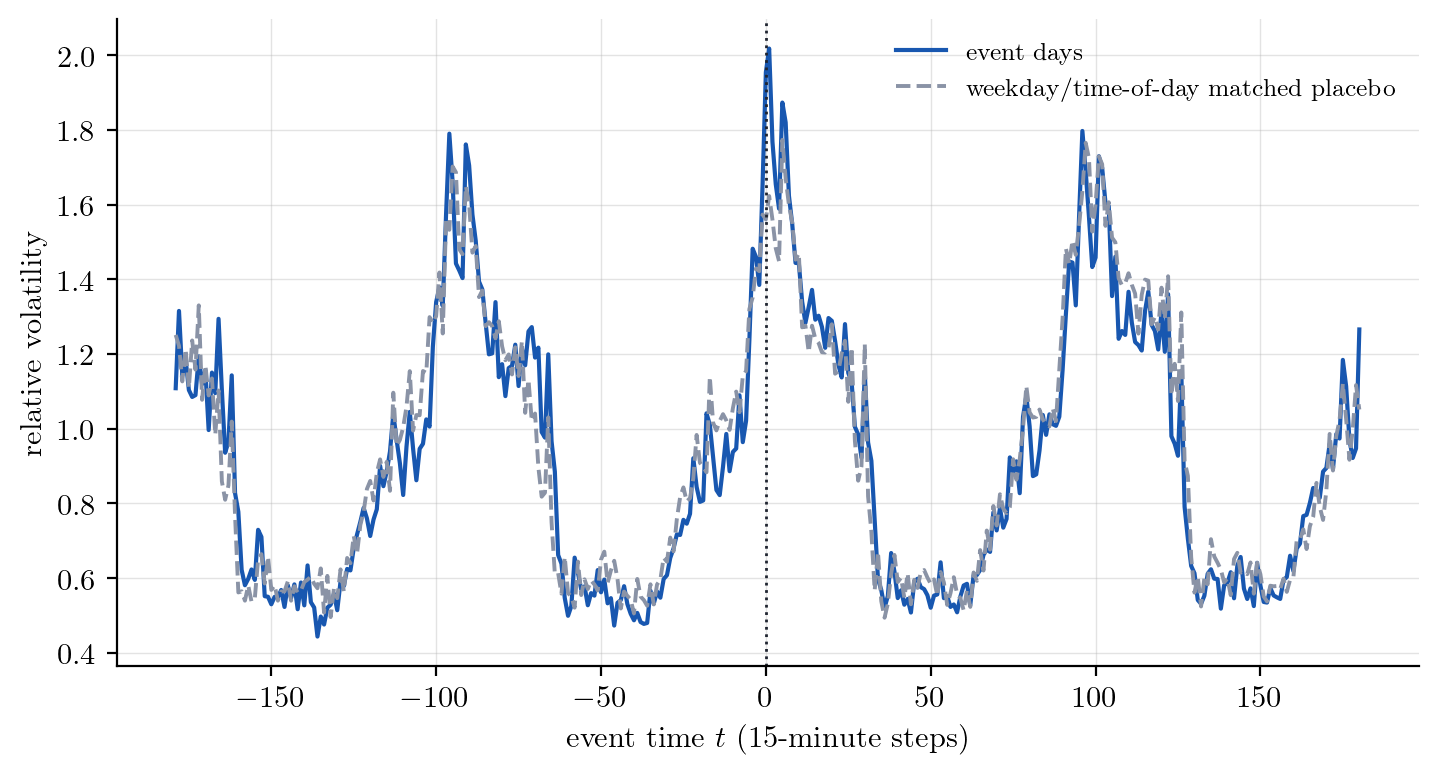
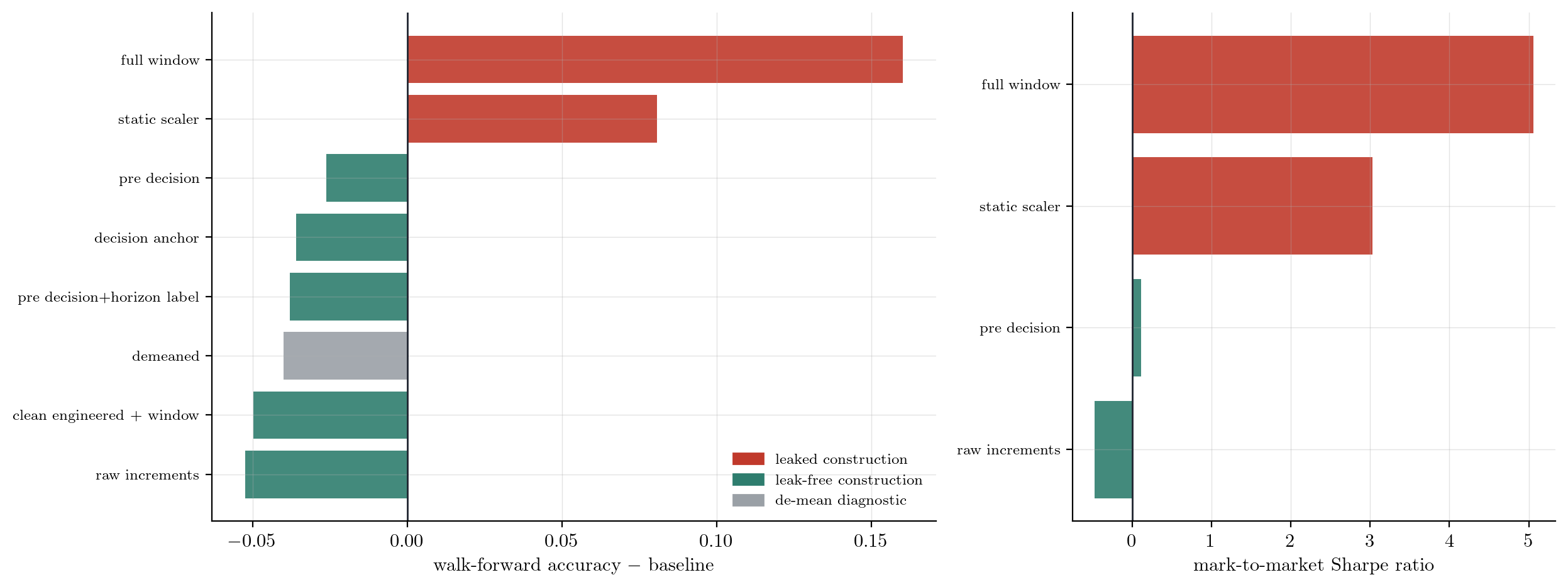
Does the market know the content of a macroeconomic announcement before it is released? The question is harder than it looks, because the research pipeline itself can create the illusion of foreknowledge. We start from such a case: a trading strategy with a mark-to-market Sharpe ratio of 5.1 whose edge disappears entirely once its inputs are restricted to information available before each release. We then build a test that reports, alongside its verdict, the smallest effect it could have detected. Its power is established twice over. Synthetic leakage of known size and timing, planted in the real data, is found and correctly dated. And on a documented historical leak, the sale of the Michigan sentiment index to paying subscribers five minutes ahead of its public release, the test detects pre-release information appearing at exactly the minute of the early release, and stays silent in the smaller sample after the practice was shut down in 2013. On NASDAQ-100 futures from 2020 through 2026, the answer to the opening question is, within the scope the test can certify, no: across 1,715 releases, pre-release prices carry no sustained aggregate common-sign footprint of the announcement surprise above a detection floor near a correlation of 0.12; the same silence holds for order flow and liquidity in an extension battery of 2,113 releases, and in a hold-out year of 391 releases kept apart from every design choice. For sparse event categories such as CPI and payrolls the test is less powerful, and moderate leakage there cannot yet be excluded. We conclude with a reporting standard for studies of pre-release information, positive or negative.
Core model
leakage information curve (LIC)
leak-free pre-release signal
injection-to-correlation calibration
Figures
Full paper
This is a working paper. The full PDF is available on request — the replication code is public on GitHub.